What Is Synovial Fluid? Guide to Joint Lubrication Over 50
Picture this: the alarm buzzes, and as you swing your legs over the edge of the bed, a familiar stiffness grips your knees and hips. Getting up feels like coaxing rusty hinges. Later, tackling the stairs or kneeling in the garden brings that same subtle resistance—a reminder that your once-effortless movements now demand a moment's negotiation. If you're an active adult over 50, this morning joint stiffness might be all too familiar. You're not alone, and it's not just 'getting old.' At the heart of smooth, healthy joint movement lies synovial fluid, the body's natural joint lubrication system. This guide explores what synovial fluid is, why it matters for joint mobility over 50, and practical ways to support it—all grounded in science, without the hype.
What Synovial Fluid Actually Does
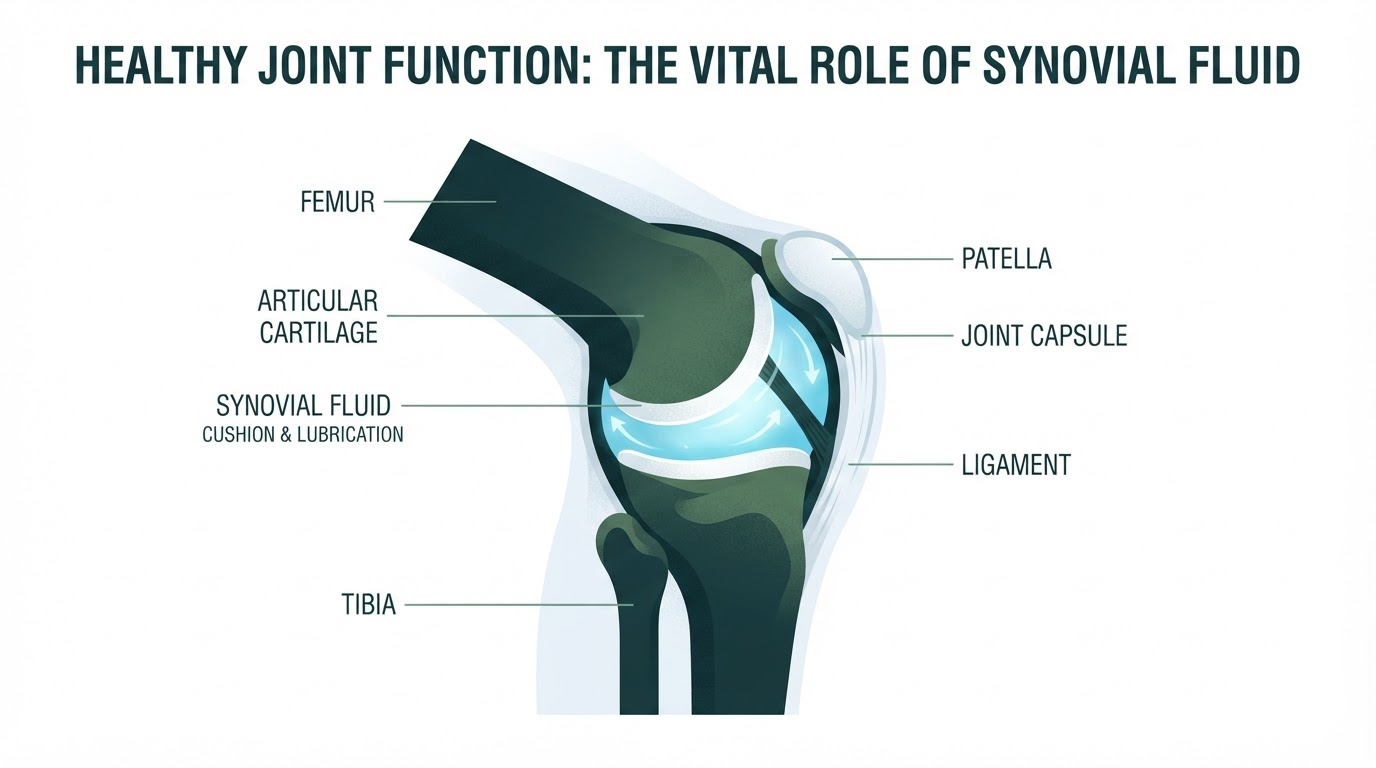
Synovial fluid is more than a slippery liquid; it's the lifeblood of your joints. Produced by the synovium—a thin membrane lining your joint capsules—this clear, viscous fluid bathes cartilage surfaces in every knee bend, shoulder rotation, and hip stride. Think of it as the oil in a finely tuned engine, ensuring parts glide rather than grind.
Its primary roles include:
- Cushioning and shock absorption: Synovial fluid acts like a hydraulic shock absorber, distributing loads during impacts—whether from a brisk walk or lifting groceries—protecting delicate cartilage from wear.
- Nutrient delivery: Unlike vascular tissues, cartilage lacks blood vessels. Synovial fluid shuttles essential nutrients and oxygen directly to these avascular structures, supporting their resilience.
- Friction reduction: With its gel-like consistency, it minimizes drag between bones, enabling fluid joint lubrication and reducing the risk of surface damage over time.
In youth, this system hums seamlessly. But as decades accumulate, subtle shifts can lead to sensations of dry joint fluid, where movements feel less forgiving, especially upon waking.
Why Joints Can Feel Dry as We Age: The Synovial Fluid Connection
Entering your 50s and beyond doesn't mean inevitable decline, but The Synovial Fluid Connection reveals why many notice changes. Central to synovial fluid's thickness is hyaluronan (also called hyaluronic acid), a large molecule that gives the fluid its lubricating viscosity—like the gelatin in a premium lubricant. Studies associate age-related declines in hyaluronan concentration with thinner fluid, which may contribute to that creaky morning joint stiffness.
This thinning isn't dramatic overnight but accumulates, influenced by lifestyle. The result? Joints may feel less cushioned, prompting caution during activities you love, like hiking or playing with grandkids.
Everyday Factors Linked to Stiffer Mornings
- Sedentary spells: Prolonged sitting thickens fluid temporarily but reduces overall production.
- Hydration gaps: Dehydration concentrates synovial fluid, amplifying stiffness.
- Stress and inflammation: Everyday oxidative stress can subtly impair hyaluronan synthesis.
- Postural habits: Poor alignment during sleep or desk work limits fluid circulation.
Recognizing these patterns empowers synovial fluid support without overhauling your life.
The Glucosamine Trap: Why Some Common Approaches Miss Lubrication
You've likely heard the buzz around glucosamine and chondroitin—staples in joint supplements for decades. They target cartilage's building blocks, potentially aiding structure. But here's The Glucosamine Trap: these ingredients shine for matrix support, yet they don't directly enhance synovial fluid viscosity or joint lubrication.
Research highlights a disconnect—many formulas prioritize cartilage over lubrication. If dry joint fluid drives your stiffness, focusing solely here might overlook The Synovial Fluid Connection. Many adults find broader strategies, including hyaluronan-focused support, align better with lubrication needs.
5 Daily Habits That Support Natural Joint Lubrication
The good news? You can nurture synovial fluid support through consistent, low-effort habits. These may help promote thicker, more effective fluid for joint mobility over 50—many active adults report smoother mornings with them.
- Prioritize hydration: Aim for 8-10 glasses of water daily. Hydrated synovial fluid circulates better, supporting viscosity. Add lemon for flavor and gentle antioxidants.
- Gentle morning mobility: Spend 5 minutes on cat-cow stretches or ankle circles. This 'wakes up' fluid distribution, easing morning joint stiffness.
- Consistent low-impact movement: Walking 20-30 minutes daily pumps synovial fluid like a bellows, enhancing nutrient flow and healthy joint movement.
- Strength for stability: Bodyweight squats or resistance bands 2-3 times weekly bolster muscles around joints, reducing undue stress on lubrication.
- Balanced nutrition with hyaluronan-supportive elements: Include omega-3-rich fish, colorful veggies, and botanicals. For example, Mobilee®—a patented, high-molecular-weight hyaluronan from rice—is studied for potential lubrication support in supplements, offering a targeted botanical option.
Layer these gradually; consistency trumps intensity for lasting joint lubrication.
When to Talk to Your Healthcare Professional
These habits support wellness, but they're no substitute for professional insight. Consult your doctor if stiffness persists beyond 30 minutes post-waking, accompanies swelling, warmth, or limits daily function. They can rule out underlying issues and tailor advice to your health profile.
Next Step: Understand Your Personal Mobility Pattern
Ready to pinpoint what influences your joint mobility over 50? Take JOINT35's free 60-second Joint Mobility Assessment. This educational tool—not a medical diagnosis—highlights patterns in stiffness and lubrication factors, empowering informed next steps.
JOINT35 is an independent educational resource dedicated to science-backed joint health insights for adults over 50. We do not sell products directly but may earn affiliate commissions from recommended options.
Affiliate Disclosure: JOINT35 is an affiliate site. We may receive compensation if you purchase through links, at no extra cost to you. Recommendations are based on research, not ownership.
Medical Disclaimer: This information is for educational purposes only and is not medical advice. Consult a qualified healthcare professional before starting any supplement, exercise program, or lifestyle change, especially if you have pre-existing conditions.